Sunday, July 08, 2007

Sam Fuller's SHARK

Sam Fuller’s Shark is available on DVD from Troma Entertainment. The poor DVD transfer is a disservice, but not being able to see the film would be an even greater disservice. What is one to do in this situation? In an annoying intro to the film, the excitedly idiotic Lloyd Kaufman I believe said that they acquired the rights, meaning this was not a public domain situation. He seemed to imply in his frenzied delivery that the outtakes were not available so that a reconstruction of Sam Fuller’s original vision was not possible (the producers apparently interfered with this film, which is something I was vaguely aware of). That’s all well and good, but this seemed to me to be a transfer of a 16mm print of fairly poor quality. The sound especially was atrocious and sounded to me like a weak 16mm mono track. (This is supposition on my part.) The transfer of what is already a poor source seems only fair at best. Either the print itself is too dark or the transfer was not done properly to account for this, or a combination of both. In any case, many of the night scenes are unwatchable. The final evidence suggesting a 16mm print would be the 1.33 aspect ratio. This disservice to the film could have been avoided by hunting down a 35mm print and spending money on a proper transfer. My guess is they had this 16mm print in their closet and got the rights so they could make some money.
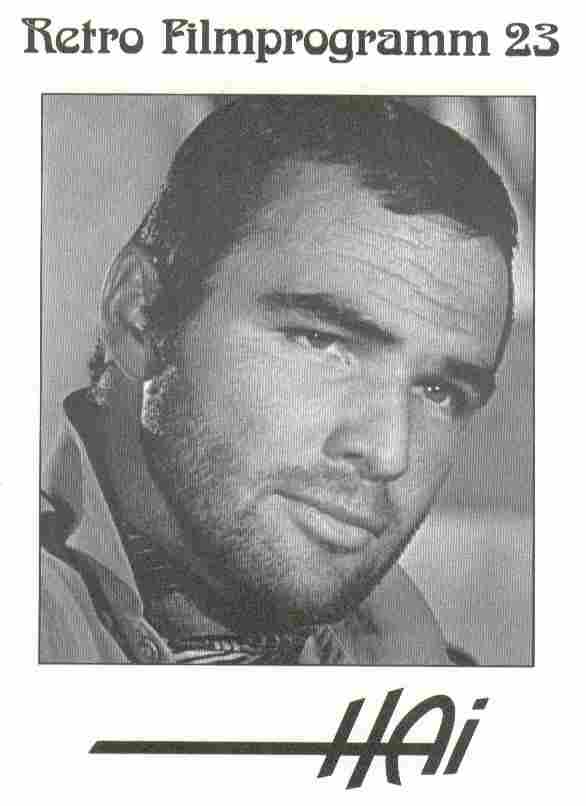
Is the film worth seeing anyway? Yes, it is good, solid Sam Fuller work. The interference by the producers (assuming it is true) has not taken away from Sam Fuller’s style. The fight scenes (although spoiled by this transfer since they take place at night) seem drawn from the same well as those in Pickup on South Street. The dialogue sounds clearly like Fuller’s throughout. The weakness is in the shark footage. Since this is just an Internet writing outlet, and since I need to remove excuses for procrastinating writing blog entries, I have not researched this, but I wonder what the quality of shark movies had been up to that point (1969). If it was breaking new ground, then perhaps some of the weakness of the shark scenes can be forgiven. In any case, whether it can be excused or not, they are in effect very weak scenes. Many times there are just lame shots of sharks swimming around with a big light shining obviously down on them. (It would be pure speculation to wonder if perhaps the likeliest interference by the producers was the insertion of as much poor shark footage as possible, especially since their movie is entitled Shark.)

The movie is undermined because these shark scenes, including the opening one, lack power, danger, thrills or scariness. Fuller often liked a grabber of an opener to set the movie hurtling into motion. In light of that it seems very likely story structure-wise that the opening was Fuller’s idea (it is certainly unconventional, opening with quiet, calm underwater scenes with no music, no credits, no story, no explanation or context for what we are seeing) and that the blame for the weakness of its execution this time must rest with him. (I’ll report back if I can research further the specific interference by the producers.) It prevents the movie from being great, perhaps even sinking it a notch lower than decent. But all the scenes of dialogue and plot are still excellent, high-quality Fuller to me, and would perhaps be even more engaging with a proper transfer of what appears to be some truly excellent cinematography and especially with the full and properly audible sound track. The cast is also pretty good with personal fave Arthur Kennedy and Barry Sullivan backing up a young and vigorous Burt Reynolds. (One other amateurish touch is Reynolds’ beard appears to change too much in thickness in some early scenes. Producers? I guess admirers of Sam Fuller will always want to blame it on someone other than Sam!)

I’ll have to hunt for an other-region DVD that may be of better quality (perhaps DVD Beaver knows of one).

After writing the above paragraphs, I watched the DVD’s bonus materials, which did a pretty good job of explaining some of the background of the film and what exactly happened to it. (Unfortunately, I delayed writing this for some time after watching these pieces, so I apologize for any inaccuracies.) It seems Fuller did finish the film and deliver a cut, but that the producers (independent Mexican ones) recut it, editing scenes by chopping parts up to tighten them up, or something to that effect. In any case, from what was said in the bonus interviews, it doesn’t sound like the studio was responsible for the poor shark scenes that undermine the film. What I mention above as being the strong Fuller aspects seem to have shone through despite what editing was done to them. Perhaps they would have been even stronger without the interference. (The main informative interview on the DVD was with Jerome Rudes, one of the collaborators on Fuller’s posthumous autobiography, A Third Face.)

Saturday, July 07, 2007

More Digging

Just a quick addendum to the previous post, regarding how some works by great directors can get buried on packaged DVD sets.

I was delving into the filmography of Andre de Toth and watching all his titles that were available on DVD (on Netflix specifically). When I had finished, I went through his filmography on the IMDB and clicked on each title I hadn’t heard of to learn about some of his other films. Lo and behold I stumbled upon two Andre de Toth-directed westerns on a Randolph Scott triple feature DVD set from no less than Warner Brothers: Man Behind the Gun/Thunder Over the Plains/Riding Shotgun. The first film is by Felix Feist, and the second two are by Andre de Toth. Since I had recently watched some excellent Andre de Toth-directed Randolph Scott westerns, this was quite an exciting find. (It’s not on Netflix, though, so I haven’t been able to watch them yet.) Warner Brothers also has one other Randolph Scott triple feature set: Colt .45/Tall Man Riding/Forth Worth; and two John Wayne triple feature sets: The Telegraph Trail/Somewhere in Sonora/The Man from Monterey and The Big Stampede/Ride Him Cowboy/Haunted Gold. There were no tremendously exciting surprises for me amongst the directing lineups of these sets.

In all the sets, browsing on Amazon did not yield the directors’ names. The only options were to check each title in IMDB individually or go to www.DVDEmpire.com, which allows you to view the back of a DVD case clearly enough to see directors’ names (although many sets won’t have that information there). Individual titles on IMDB do indicate if they are on DVD, although I’m not sure how reliably (perhaps a distributor may operate below IMDB’s radar or do a bad job of listing the contents of their package). In the case of these two Andre de Toth westerns, the IMDB link to the DVD was how I stumbled upon this set.

Just another revelation that there are some potential buried treasures out there on these packaged DVD sets. (Perhaps I’ll build up to a more meaningful post sometime soon!)

Saturday, June 09, 2007

More Silent Films on DVD, Please

Well, that certainly was a feeble commitment! But now I'm back.

I've realized I have to set aside specific time for blog writing and will do so.

In the meantime, let me say I watched an excellent silent film by John Ford, called The Blue Eagle (1926).

Here is the fabulous original poster:


I was watching a VHS copy of an airing from an AMC Film Preservation Festival from way back when. Although a significant naval battle sequence is missing, and occasionally in early scenes a 16mm film print had to be used, this held up as a stunning example of top-drawer Ford. (All the more so when the scenes were in 35mm.)

With the recent success studios seem to be having in packaging films in box sets organized by stars (Robert Mitchum Signature Collection, Tyrone Power Swashbuckler Box Set) or themes (Film Noir Classics Collection, Literary Classics Collection), it would be amazing if they could start doing this for silent films. There are certainly enough surviving films to justify a John Ford silent film box set. I know more than enough exist just from the bunch that I taped off the AMC Film Preservation Festival. There is a Hitchcock box from Lionsgate with several silents, so the ball may already be rolling. However, I remember my disappointment upon listening to the audio commentary for Warner Brothers' DVD of The Racket (1951, John Cromwell) (part of the Film Noir Classic Colleciton Vol. 3) and hearing repeated references to the Howard Hughes silent original (1928, Lewis Milestone) that the commentator (Eddie Muller) had obviously had the good fortune to see! What a shame that wasn't shoehorned onto the same disk.

Shoehorning may be a stroke of luck for the more esoteric film enthusiasts, as studios can wedge films they consider unreleasable as standalone titles into combo sets with other more popular movies. I just had the good fortune to see the 1933 Mystery of the Wax Museum (Michael Curtiz) on the flip side of Warner's House of Wax (1953, Andre de Toth) DVD and, even though I know it did exist on VHS in the past, I couldn't help but think that I was very fortunate to even be laying eyes on this 2-strip Technicolor rarity, obviously included mainly because of its relation to the more famous remake.

I had similar feelings about the TCM/Warner Bros. DVD "Forbidden Hollywood Collection Volume One" that contained Baby Face (1933, Alfred E. Green), Red-headed Woman (1932, Jack Conway), and Waterloo Bridge (1931, James Whale). Probably the latter was the toughest standalone sell, having no bankable classic star. You can find your own examples, but one other I watched recently was the Cary Grant Screen Legend Collection from Universal which is comprised of five films that I couldn't see ever being released standalone, yet here they are presented in pretty good quality by a major studio. I bought this one and so far have only watched Thirty Day Princess (1934, Marion Gering), but I had the pervasive feeling that I was lucky to be seeing a Sylvia Sidney vehicle from her prime that was something other than Hitchcock's Sabotage or some of her Fritz Lang films.

Obviously there are still countless films of interest that they haven't figured a way to shoehorn into more salable packages or groupings, but the trend may be of help. (It goes without saying that, like the explosion of TV-on-DVD, the more manageable and more versatile DVD format itself makes this all possible.)

One of the few negatives is that when the films are not standalone releases, you sometimes have to dig or be looking for something specific, otherwise you only come across certain important films as a stroke of luck. (If you're a Raoul Walsh enthusiast, there's one of his in the Cary Grant Screen Legends Collection. There's a Douglas Sirk film in the Rock Hudson Screen Legend Collection.) Universal's Screen Legend Collections are particularly troublesome in that even on the back of the sets you can find neither the year the films came out, nor the directors. Even on Amazon.com or DVD Empire the information is not readily available, and one is reduced to researching the titles individually on IMDB.

But going back to the desire to see a John Ford silent film box set, and more silent films in general packaged together and released, one name that pops into my mind is John Gilbert, who would be well worth a silent film box set or two—or even three—since many of his silent films survive—and that's just counting the major star vehicles from his prime. Although I have a feeling if I poke my nose into one of the Garbo collections I'm going to find at least one Gilbert there.

Saturday, December 16, 2006

semi-feeble commitment to try again

Obviously I wandered away from this new attempt at blogging (good thing no one is watching-- excellent foresight on my part), but I'm now going to give it another go. I don't have any substantive entries prepared, thus this quick, silly entry to merely announce my intentions.

I would like to clean up this blog and remove this entry and the first entry and leave only the "real" entries like the Malle one. These kind of blog explanations, apologies and self-analyses probably won't interest readers when and if there are some. But as with other blogs I've read, they sometimes help to get the blog rolling (no pun on "blog rolling" intended).

Entries I had been formulating but may never come to fruition were an entry on my very negative encounter with the film work of Mark Sandrich and his philosophy on film, for which Astaire and Pandro S. Berman also share blame. I saw the movie Top Hat and was disappointed and found it empty and lacking a soul. Then in the bonus materials on the DVD I learned that these three musketeers had this "blueprint" theory of filmmaking where they mapped out for every Astaire/Rogers movie where funny moments, musical moments, sad moments and dance moments should occur (i.e., about 20 minutes in, we need this sort of thing to happen). Seemed very contrary to the interests of art, but I guess I was holding off on this scathing post until seeing more Sandrich films. Difficulty there is I'd already been put off seeing more.

Another entry I was formulating was on DVD bonus materials or something. Or it might have been on the annoying practice of including the music or key dialogue from the films in the DVD menus before you've seen the movie ("priming" you to have a recognition/fondness for themes that ought to be introduced to you [and maybe surprise you] at the point in the film at which they are first used-- even Criterion does this in their menus). In any case, the passion seems to have waned on that issue for now, but perhaps will return and be followed quickly by a substantive entry on the subject.

Thursday, August 31, 2006

Louis Malle

Louis Malle continues to disappoint. Or at least underwhelm me. I just viewed Elevator to the Gallows. It is a beautifully shot (D.P.: Henri Decaë) film and has a beautiful score (Miles Davis). But the film has no curiosity about the medium or about life whatsoever. You could perhaps say this is not fair for someone's first film, but when there's not even an inkling it does not bode well for the future.

While I am well schooled in many of the great directors, especially those of the nouvelle vague, I have seen almost no Louis Malle, and there is a reason. Every time I see one it puts me off seeing any further ones for quite a while. (And I am not trying to knock him down from any pedestal of "the great directors" since I believe very few venture to place him there anyway. Nor is he generally regarded as a member of the nouvelle vague.)

The first I saw, which it is impossible for me to judge, was Au revoir, les enfants (1987). Well, I can judge it, but I can't recall it very well, as I saw it in school, but it made a fairly negative impression on me at the time. (Although I was not interested in film as an art at the time.) In any case, it seemed a pretty straightforward, mainstream weepy-entertainment-- the sort that is palatable and easy for AMPAS to nominate--oh, yeah, and of course, it did. (While quality films like 8 1/2 have been nominated, they are the exception to themediocrityy that rules the Oscars foreign film section.) A constant aversion to the Oscars and my association of Louis Malle with that sort of filmmaking caused me to steer clear of his films from an early age (however unfair that may have been, given the youthful state of my mind when I saw it!).

The next encounter with Malle was in viewing a bootleg of his film Black Moon, a horrifically bad attempt at an "experimental" film, that showed again that Malle just doesn't get it. He doesn't understand film (as an art), and he doesn't understand art--at all, it would seem. Perhaps this is why he's most comfortable in the world of the cinéma de qualité because he sure didn't seem comfortable in the idiotic dreamlike world of Black Moon. That film is an unqualifiable disaster from beginning to end. It will bore you to tears. The basic root of the problem is he has translated a dream (perhaps a specific dream of his) into film and tried to represent a dream as accurately as possible--but unanalyzed (and with no success or even attempt in communicating the "non-concreteness" inherent in all dreams). Approaches like "pure cinema" would interest me far more (abstract association of images without an attempt at divining or creating meaning). I guess anyone could make the mistake he did, but I think a decent director would have seen how horrible and boring this all was and dumped it, reworked it, saved it somehow. But he's just sort of like a mindless robot, seemingly incapable of self-analysis, as his films are incapable of a self-analysis of their own medium, which interests in filmmakers like Godard.

But now Criterion is shoving him in our faces by finally getting a few of his previously unavailable films out on DVD here in the U.S. (Even if I may hate certain films, I want them to be available on DVD-- otherwise how can one evaluate for oneself?) They've released Au revoir, Lacombe Lucien and Murmur of the Heart, but I finally took the bait, wanting to start at the beginning, with their release of Elevator to the Gallows. This was a much more tolerable outing for me than the previous two, but all the emptiness of this filmmaker's vision is there to behold from the beginning. You can almost see it visualized in the endless wandering scenes of Jeanne Moreau where nothing perhaps is going on in her head. And this would serve for me as the representation of Malle's mind: wandering about aimlessly with nothing going on in it. He seemed to recognize this and was compelled to add internal thought voiceover to illustrate her "thoughts." But these thoughts he added were all the self-evident things we would expect her to be thinking, and thus are entirely redundant. And so it is here that we see the inner workings of Malle's mind: he is never thinking anything beyond what you expect him to be thinking. Here, where there could have been something interesting added to the film, there is merely redundancy, meaningless reinforcement. No self-analysis, no meaningful self-reflection. The fact that he couldn't leave it blank either is another indication of his poor artistic instincts.

I've only seen three, so I'll leave it there-- a kind of premature condemnation.